
You’re managing everything, such as visits, meals, medications, and appointments. But checking in every few days isn’t enough anymore. Your loved one’s struggling with daily tasks. You’re juggling care alongside work and family. That’s when it becomes urgent: should we bring in professional help?
This decision weighs heavily, and guilt is normal. You might fear losing control or worry you’re abandoning your loved one. Yet professional support isn’t abandonment; it’s building a safer care system for everyone. At Haven Care Australia, we’ve guided hundreds of families through this transition. This guide walks you through it with clarity and compassion.
Recognising When Family Care Isn’t Enough Anymore
The signs often emerge gradually. Your loved one forgets medications. They miss meals or show weight loss. Mobility becomes unsafe. You notice them becoming confused or increasingly isolated. Meanwhile, you’re juggling caregiving with work, your own children, and your household, and something has to give.
These aren’t failures on your part. They’re signals that care needs have evolved beyond what family alone can reasonably manage. Increased falls, poor nutrition, hospitalisation, and caregiver burnout are common indicators that professional support is necessary.
When you offer personal care services in Brisbane, you’re not replacing family involvement. You are adding skilled, trained professionals who can provide consistent, reliable support that family caregiving cannot.
Understanding Professional Personal Care Support
Professional personal care covers everything from intimate activities like bathing and dressing to mobility assistance, meal preparation, medication reminders, and companionship. A disability service provider can assess your loved one’s specific needs and create a customised plan addressing their unique circumstances.
NDIS daily personal activities funding helps eligible individuals access these services. Whether your situation involves ageing parents, disability support, recovery from illness, or mental health challenges, there’s likely a care option tailored to your circumstances.
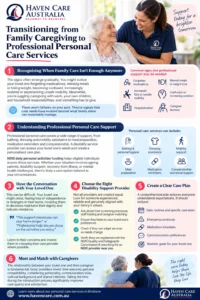
Step 1: Have the Conversation with Your Loved One
This is often the hardest part. Your loved one might resist, fearing loss of independence or strangers in their home. But involving them in decisions maintains their dignity and reduces resistance.
Frame the conversation around independence and maintaining their lifestyle, not restrictions. Say things like: “This support means you can stay home longer” or “Professional help lets you focus on the activities you enjoy.” Listen to their concerns. Involve them in choosing their care provider when possible.
Step 2: Choose the Right Disability Support Provider
Not all providers are created equal. You want someone experienced, reliable, and genuinely aligned with your family’s values.
Ask potential providers about their screening processes, staff training, and caregiver matching practices. Do they listen carefully to your loved one’s preferences? Can they adapt services as needs change? What communication systems do they use to keep families informed?
If you’re searching for an “NDIS provider near me,” verify they’re registered with the NDIS Quality and Safeguards Commission. This means they’ve met rigorous practice standards and are accountable for quality outcomes.
Step 3: Create a Clear Care Plan
A comprehensive plan ensures everyone understands expectations. It should detail daily routines, specific care tasks, emergency protocols, medication schedules, and communication preferences.
Work with your loved one and their care provider to identify realistic goals. Maybe it’s maintaining independence with daily tasks. Perhaps it’s enabling them to continue hobbies or volunteer work. Clear goals guide the entire care relationship.
Step 4: Meet and Match with Caregivers
The relationship between your loved one and their caregiver is fundamental. Good providers invest time ensuring genuine compatibility, not just pairing whoever’s available.
Personality, communication style, cultural background, and even shared interests matter. Many people have experienced a “good fit” after meeting their caregiver, which significantly improves care quality and satisfaction.
Like finding a personal care worker or any city, it requires careful matching; finding the right person for Brisbane’s personal care services means taking time during the introduction process.
Haven Care Australia: Where Professional Disability Support Meets Family Compassion
At Haven Care Australia, we’re not just another provider. We’re a partner in your family’s caregiving journey. We understand the guilt, the questions, the relief when professional support finally arrives. We specialise in creating smooth transitions that respect your loved one’s dignity whilst giving families genuine peace of mind.
Whether you need disability support for adults, aged care services, NDIS provider support, or comprehensive personal care assistance, we’re here to listen, assess, and build a customised care plan that actually works for your family.
Ready to discuss your situation? Give us a call at +61 452132805 or send us an email at officemanager@havencare.com.au. We will answer your questions, address your concerns, and help you navigate this transition with confidence and compassion. This is because caring for family shouldn’t mean sacrificing your own wellbeing.
FAQs
1. How do I know if my loved one is ready to accept professional caregiving help?
Signs include increased falls, missed medications, poor nutrition, struggling with bathing or dressing, hospitalisations, or you feeling overwhelmed managing care alongside work and family responsibilities.
2. What if my parents refuse professional care services because they fear losing independence?
Frame professional care as enabling independence rather than removing it. Start with minimal hours. Let them choose their caregiver when possible. Show how support maintains their lifestyle longer.
3. Can professional caregivers manage complex medical needs, or do we need clinical nurses?
Personal care workers handle daily activities and companionship. For complex medical tasks, such as wound care, catheter management, and medication administration, you will need registered nurses or specialist providers.
4. How much time does the adjustment period usually take for everyone to feel comfortable?
Initial adjustment typically takes two to four weeks as routines establish and relationships develop. Some families need longer. Consistency, patience, and open communication significantly improve comfort timelines.
5. Should I stay in the room during the first care visits, or does my presence make my loved one uncomfortable?
Ask your loved one and caregiver what they prefer. Some benefit from your presence during early visits for reassurance. Others adjust better when you’re not watching. Find what works for your situation.
6. What if the first caregiver isn’t a good match? Can we request someone different?
Yes. Quality providers expect this and have processes for addressing compatibility issues. Communicate concerns clearly and respectfully. Finding the right match sometimes takes time, and that’s normal.
7. How do I balance being involved in care decisions while respecting the professional caregiver’s expertise?
Bring your knowledge of your loved one’s preferences and history. Listen to caregiver observations and clinical recommendations. Together, you form a partnership. Neither person has complete information alone.
8. Can I reduce caregiving hours as my loved one’s condition improves, or is it a fixed commitment?
Most providers offer flexibility to increase or decrease hours as circumstances change. Regular care plan reviews (monthly initially) allow you to adjust services based on actual needs and your loved one’s progress.
9. What happens if my loved one has a medical emergency or crisis while professional care is happening?
Good providers have clear protocols for emergencies. They know when to call triple-zero, contact your GP, or notify family immediately. Your care plan should specify these procedures before care begins.
10. Is it normal to feel guilty about no longer being the primary caregiver?
Guilt is extremely common and completely normal. Remember: professional care doesn’t replace family love and involvement. It enables you to be a better family member because you’re not exhausted from managing every care task.